
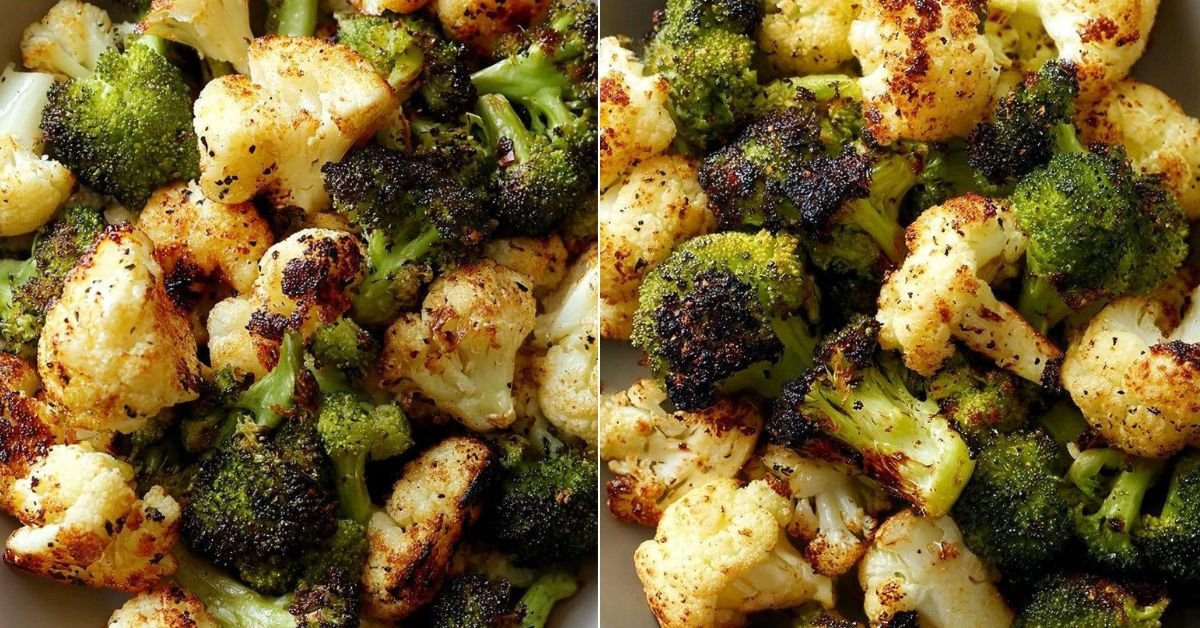
1) What I Learned Testing Roasted Broccoli & Cauliflower
Soggy roasted vegetables are usually not a seasoning problem; they are a moisture and spacing problem. I’m Elena, and after pulling one too many trays of pale broccoli and cauliflower from the oven, I started testing hotter heat, drier florets, and better pan spacing. The discovery was simple but satisfying: oven roasted broccoli and cauliflower need a hot oven, enough oil to coat, and room to brown. Now this roasted broccoli and cauliflower side dish gives me nutty edges, tender centers, and that calm little dinner-table relief when a vegetable side actually tastes like something worth saving.
Table of Contents
- 1) What I Learned Testing Roasted Broccoli & Cauliflower
- 2) Key Takeaways
- 3) Easy Roasted Broccoli & Cauliflower Recipe
- 4) Why Most Roasted Broccoli & Cauliflower Recipes Fail
- 5) Ingredients for Roasted Broccoli & Cauliflower
- 6) How to Make Roasted Broccoli & Cauliflower
- 7) Recipe Card: Roasted Broccoli & Cauliflower
- 8) Tips for Making Roasted Broccoli & Cauliflower
- 9) Common Mistakes & Fixes
- 10) How to Tell Roasted Broccoli & Cauliflower Are Perfect
- 11) Professional Secrets Behind Better Roasted Broccoli & Cauliflower
- 12) Best Dishes or Pairings to Serve With Roasted Broccoli & Cauliflower
- 13) Making Roasted Broccoli & Cauliflower Ahead of Time
- 14) Storing Leftover Roasted Broccoli & Cauliflower
- 15) FAQ (Real Cooking Questions)
- 16) Save This Roasted Broccoli & Cauliflower Recipe
- 17) Conclusion
- 18) Nutrition
2) Key Takeaways
- Dry vegetables roast better: Moisture on the florets creates steam, which keeps the broccoli and cauliflower pale instead of browned.
- High heat matters: A 425°F oven helps the edges caramelize before the centers overcook.
- Pan spacing is the hidden trick: A crowded sheet pan turns oven roasted broccoli and cauliflower into steamed vegetables with roasted seasoning.
- Seasoning must coat evenly: Tossing in a bowl helps garlic powder, onion powder, salt, pepper, and olive oil reach the cut sides where flavor develops fastest.
3) Easy Roasted Broccoli & Cauliflower Recipe
This recipe works because it treats broccoli and cauliflower like vegetables that need heat, space, and surface contact, not just seasoning. Broccoli has delicate tops that brown quickly, while cauliflower has denser stems and a firmer bite. Cutting both into similar-size florets helps them finish together, so one does not burn while the other stays tough.
The flavor is simple on purpose. Olive oil helps carry the seasoning and encourages browning. Garlic powder and onion powder cling to the vegetables without burning the way fresh minced garlic can at high heat. Salt draws out the natural sweetness of the vegetables, black pepper adds warmth, and optional red pepper flakes give the whole pan a gentle lift. That balance makes this one of those broccoli and cauliflower side dishes that fits beside almost any main course.
The goal is not deeply charred vegetables or soft boiled texture. The best result is tender florets with lightly browned edges, a nutty aroma, and enough bite that the vegetables still feel fresh. That is why the method stays straightforward: preheat well, coat evenly, spread in one layer, and roast until the edges tell you the flavor has developed.
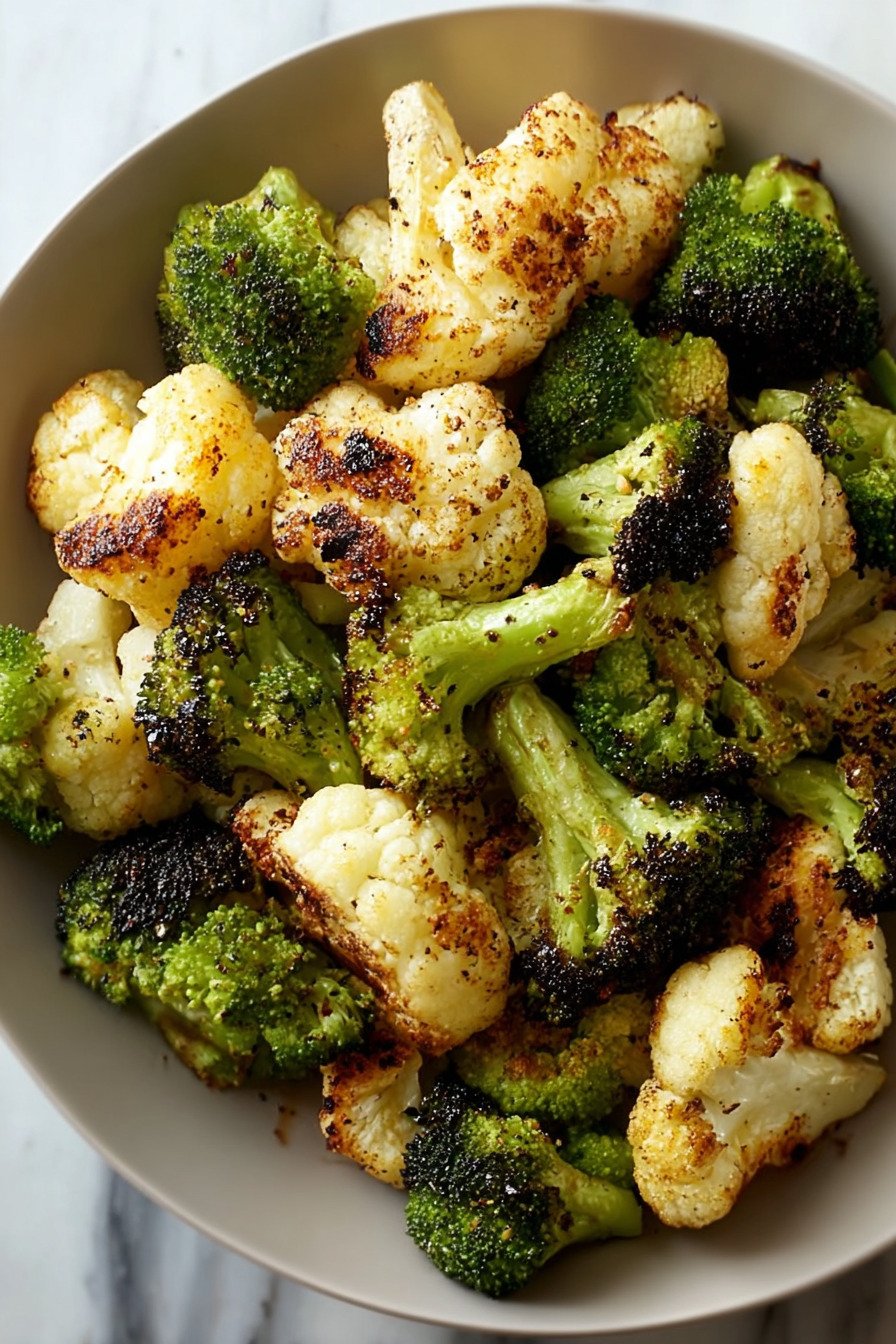
4) Why Most Roasted Broccoli & Cauliflower Recipes Fail
Most roasted vegetable failures start before the pan even reaches the oven. If the florets are wet from rinsing, that water turns into steam on the baking sheet. Steam softens the vegetables before browning can happen, which leaves the broccoli dull green, the cauliflower pale, and the texture limp. Drying the florets gives the oil and heat a better chance to work.
The second failure is crowding. When broccoli and cauliflower are packed tightly, the vegetables release moisture into each other. Instead of roasting, they sit in a humid layer and soften. A single layer with a little space between pieces creates better airflow and more browned edges.
The third issue is uneven cutting. Tiny broccoli tips can burn before thick cauliflower stems become tender. Similar-size florets are not just for looks; they are a timing tool. If some pieces are much larger, trim them down or place the thicker sides toward the outer edges of the pan where heat is stronger.
Another common problem is under-seasoning. Broccoli and cauliflower both have enough structure to need salt on the surface. If the seasoning sits in clumps, some bites taste flat while others taste sharp. Tossing thoroughly in a large bowl helps the oil and spices coat the florets evenly.
The final failure is roasting too low. A mild oven softens the vegetables slowly, but it does not develop enough color in time. At 425°F, the edges brown while the centers become tender, giving oven baked broccoli and cauliflower a better roasted flavor without turning mushy.
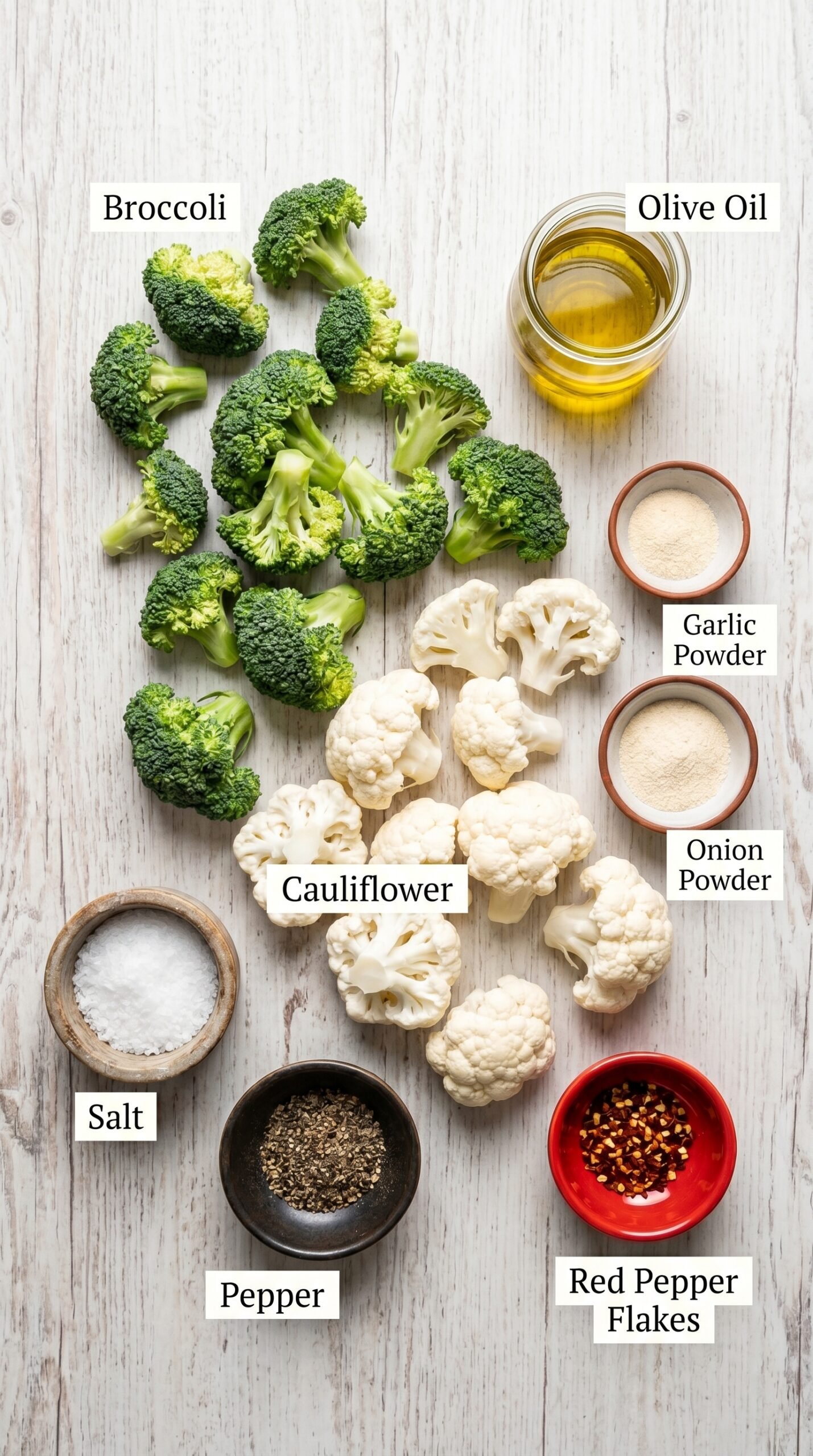
5) Ingredients for Roasted Broccoli & Cauliflower
Broccoli: Broccoli brings grassy freshness and crisp edges when roasted well. Use florets that are similar in size, and keep some stem attached so the pieces do not fall apart. If the broccoli is washed right before cooking, pat it dry because surface water blocks browning.
Cauliflower: Cauliflower adds a mild, nutty base and a firmer bite. It benefits from high heat because its cut surfaces caramelize nicely. If the pieces are too large, they may stay firm in the center while the broccoli finishes, so trim them to match the broccoli florets.
Olive oil: Olive oil helps the seasonings stick and gives the vegetables enough surface fat to brown instead of dry out. Use it when tossing, not after roasting, so every floret gets a light coating. Too little oil can make the vegetables taste dusty; too much can make them feel greasy.
Garlic powder: Garlic powder gives savory flavor without the risk of fresh garlic bits burning in a hot oven. It works especially well for easy broccoli and cauliflower recipes because it spreads evenly over the florets.
Onion powder: Onion powder adds a quiet sweetness that supports the roasted flavor. It is useful here because broccoli and cauliflower can taste flat if the seasoning is only salt and pepper.
Salt and pepper: Salt sharpens the natural vegetable flavor and helps the browned edges taste more pronounced. Pepper adds gentle heat and a little bite. Season before roasting so the flavor develops while the vegetables cook.
Red pepper flakes: Red pepper flakes are optional, but they add a small spark that keeps the dish from tasting too plain. Use them before roasting for a mellow heat, or skip them if serving children or anyone sensitive to spice.
- Broccoli vs cauliflower: Broccoli tips brown faster, while cauliflower needs enough time for its denser centers to become tender.
- Garlic powder vs fresh garlic: Garlic powder is steadier at high heat; fresh garlic can burn before the vegetables finish.
- Warm pan vs cold pan: A hot oven is more important than preheating the pan for this recipe, because the florets need steady surrounding heat.
- Single layer vs crowded pan: A single layer creates roasted edges; crowding creates trapped steam and softer texture.
6) How to Make Roasted Broccoli & Cauliflower
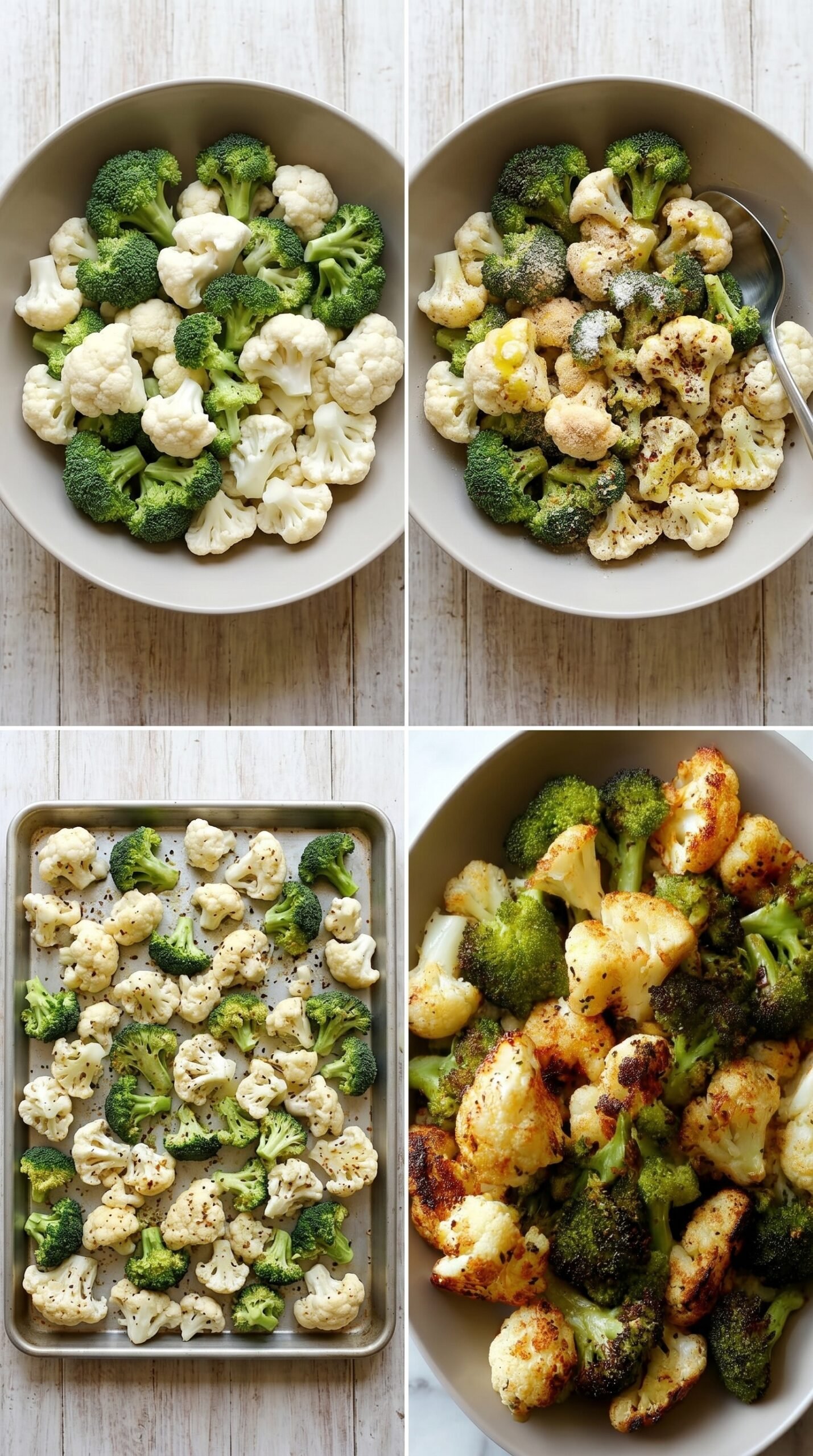
Step 1: Preheat the oven to 425°F. Give it enough time to fully heat, because a properly hot oven is what turns the vegetable edges nutty instead of pale.
Step 2: Place the broccoli and cauliflower florets in a large bowl. Check the sizes before seasoning. If a cauliflower piece is much thicker than the broccoli, cut it smaller so everything roasts evenly.
Step 3: Drizzle the olive oil over the vegetables, then add garlic powder, onion powder, salt, pepper, and optional red pepper flakes. Toss until the vegetables look lightly glossy and the seasoning is spread across the tops and cut sides.
Step 4: Spread the vegetables on a baking sheet in one layer. Do not pile them up. If the pan looks crowded, use a second baking sheet rather than accepting steamed texture.
Step 5: Roast for 20 to 25 minutes, until the broccoli tips are slightly browned and the cauliflower is tender when pierced. The vegetables should smell nutty and savory, not raw or sulfurous.
Step 6: Remove the pan from the oven and serve warm. Taste one piece before serving; if the flavor feels muted, a small final pinch of salt can wake up the whole tray.
7) Recipe Card: Roasted Broccoli & Cauliflower
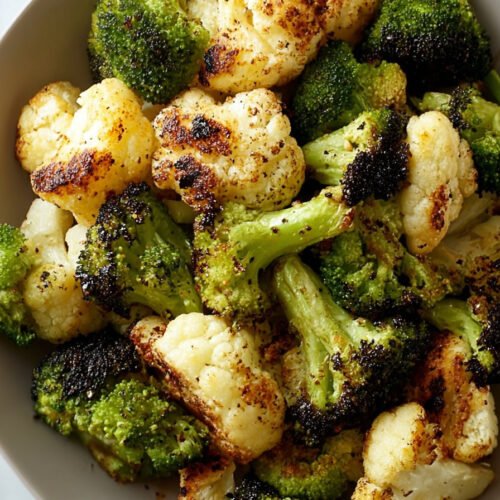
Roasted Broccoli & Cauliflower: A Flavorful Twist for Oven Roasted Broccoli and Cauliflower
Ingredients
- 1 head of broccoli, cut into florets, kept fairly similar in size so the pieces roast evenly
- 1 head of cauliflower, cut into florets, patted dry if freshly washed to prevent steaming
- 3 tablespoons olive oil, enough to lightly coat the vegetables without making them greasy
- 1 teaspoon garlic powder, for savory depth that distributes evenly over the florets
- 1 teaspoon onion powder, to add a subtle sweet-savory background flavor
- Salt and pepper to taste, added generously enough to season the vegetables through the edges
- 1/4 teaspoon red pepper flakes (optional), for gentle heat without overpowering the vegetables
Instructions
- Preheat the oven to 425°F (220°C) so the baking sheet environment is hot enough to encourage browning rather than slow steaming.
- In a large bowl, combine the broccoli and cauliflower florets, checking that the pieces are close in size for even tenderness.
- Drizzle the vegetables with olive oil, then sprinkle with garlic powder, onion powder, salt, pepper, and red pepper flakes if using.
- Toss until the vegetables are evenly coated, making sure the seasoning reaches the cut sides and the tops of the florets.
- Spread the vegetables in a single layer on a baking sheet, leaving space between pieces so the edges can brown instead of releasing too much moisture.
- Roast in the preheated oven for 20 to 25 minutes, until the vegetables are tender when pierced and the edges are lightly browned with a nutty aroma.
- Remove from the oven and serve warm while the florets still have crisped edges and tender centers.
8) Tips for Making Roasted Broccoli & Cauliflower
Drying the vegetables is the first small step that changes the result. Even a little rinse water on broccoli crowns can slow browning, especially because the tops hold moisture in tiny pockets. A clean towel or salad spinner helps more than extra seasoning.
Use a bowl for tossing instead of seasoning directly on the sheet pan. A bowl gives you better control and keeps garlic powder or onion powder from landing in dry patches on the pan, where it can darken without flavoring the vegetables.
Pay attention to the cut sides of the cauliflower. Those flat surfaces brown beautifully when they touch the pan, so turn a few pieces cut-side down before roasting. Broccoli does not need as much contact because the florets brown along the tips.
If you want broccoli cauliflower roasted with stronger color, avoid stirring too early. Let the vegetables roast undisturbed for most of the cooking time so the edges can develop. If your oven has hot spots, rotate the pan near the end rather than constantly moving the vegetables.
For a cleaner flavor, keep the seasoning simple. This recipe does not need a heavy sauce because the main texture contrast comes from browned edges and tender centers. Too much wet seasoning can undo the roasting effect and soften the florets.
9) Common Mistakes & Fixes
Problem: The vegetables are soft but not browned. Cause: The pan was crowded, the vegetables were wet, or the oven was not hot enough. Fix: Dry the florets well, use a single layer, and roast at 425°F until the edges show color.
Problem: The broccoli burns before the cauliflower is tender. Cause: The broccoli pieces were too small or the cauliflower pieces were too large. Fix: Cut the cauliflower smaller, keep broccoli florets slightly sturdy, and check the pan around 20 minutes.
Problem: The seasoning tastes uneven. Cause: The spices were sprinkled over the pan without enough tossing. Fix: Toss everything in a large bowl until the oil looks evenly distributed and no dry spice patches remain.
Problem: The vegetables taste flat. Cause: Broccoli and cauliflower need enough salt to bring out their sweetness after roasting. Fix: Season before roasting, then taste after cooking and add a small finishing pinch if needed.
Problem: The garlic flavor tastes harsh or bitter. Cause: Too much seasoning can collect in one area or burn on the pan. Fix: Toss thoroughly and keep the garlic powder on the vegetables rather than scattered across bare spots on the baking sheet.
10) How to Tell Roasted Broccoli & Cauliflower Are Perfect
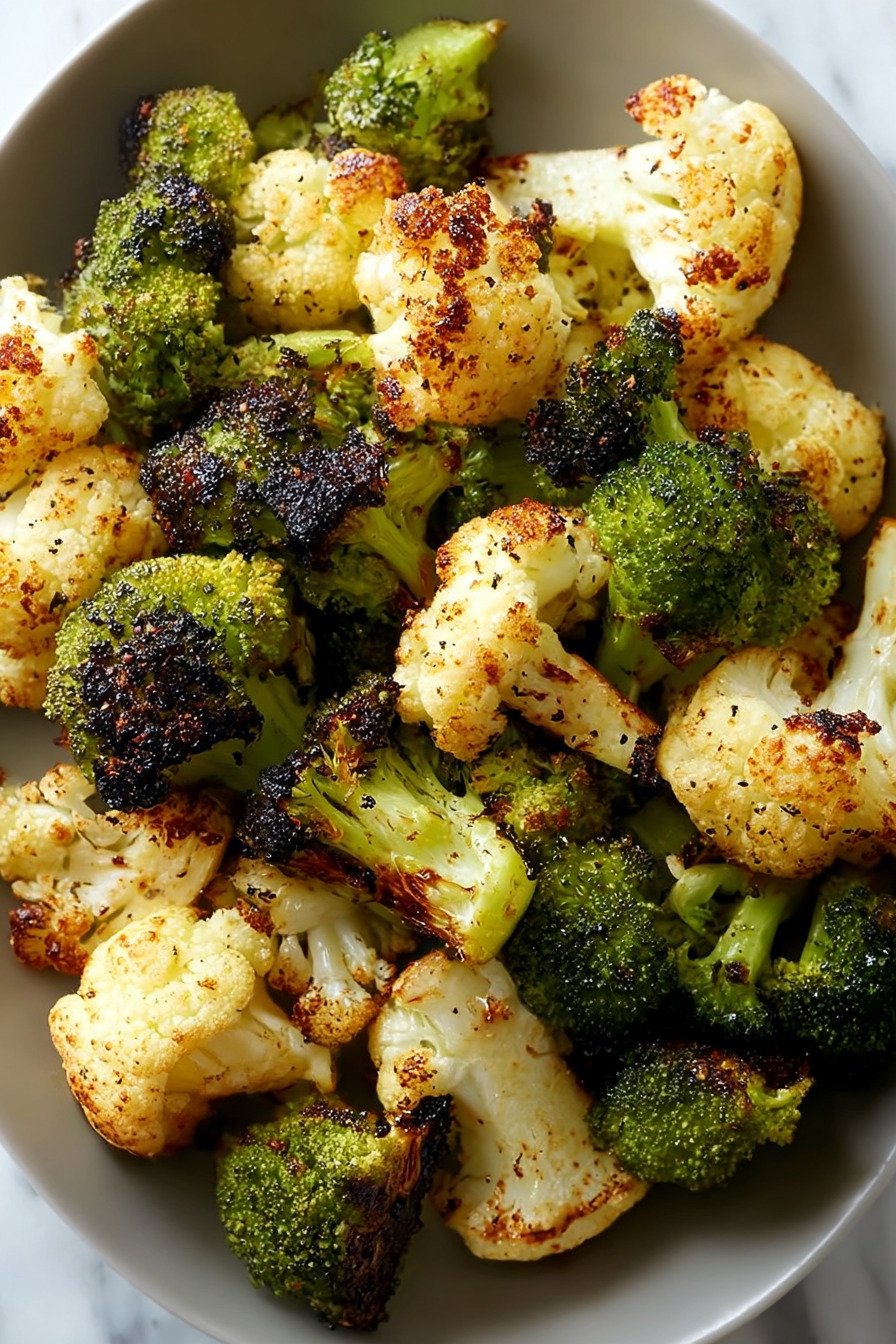
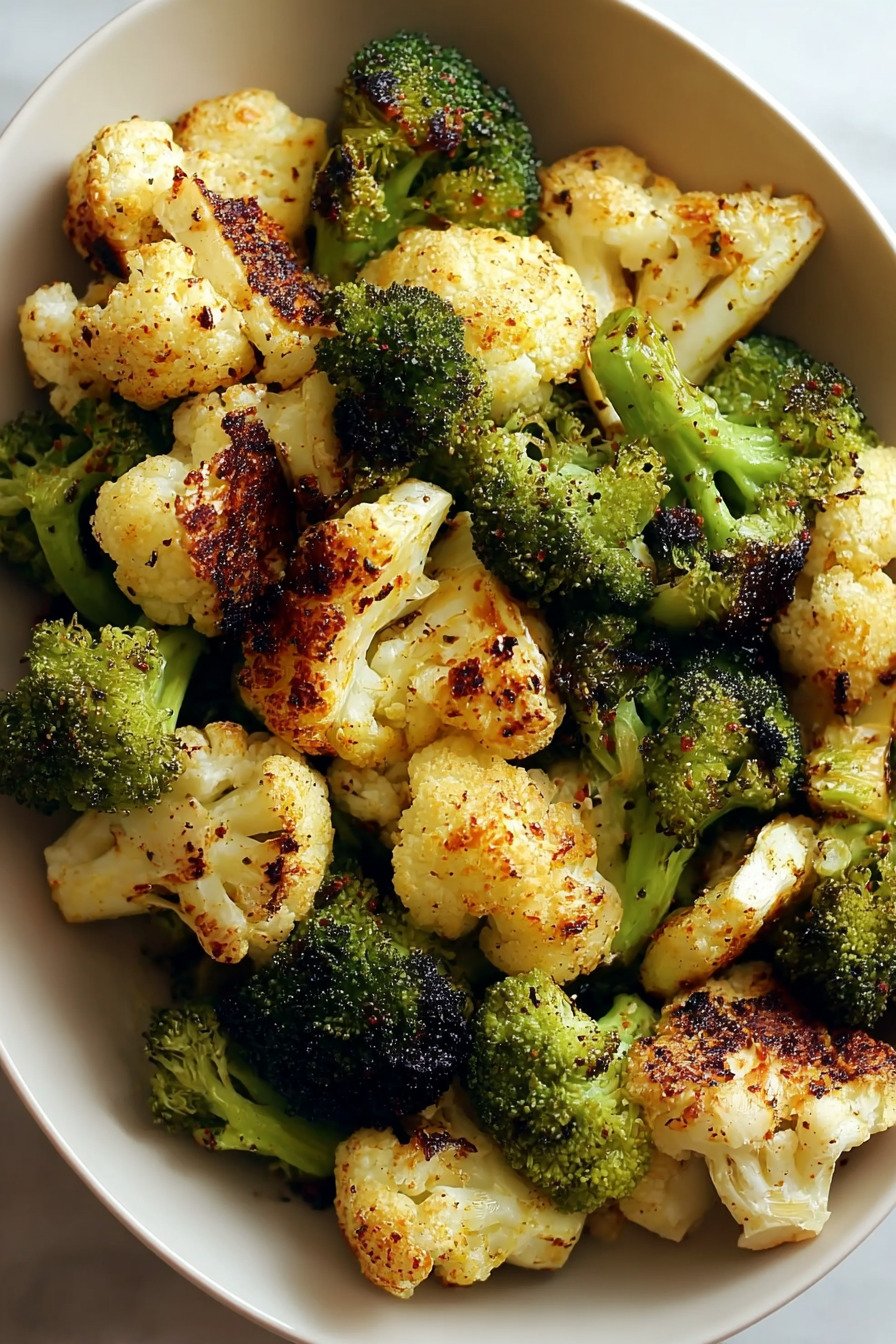
Perfect roasted broccoli and cauliflower should look lightly browned at the edges, not deeply blackened across the whole tray. The broccoli tops may have a few crisp tips, while the cauliflower should show golden patches on the cut sides. The vegetables should look roasted, not wet or shiny with pooled oil.
The texture should be tender enough to pierce with a fork but not limp. Broccoli stems should still have a gentle bite, and cauliflower should feel soft in the center without collapsing. If the vegetables bend and sag heavily, they likely steamed too much. If the cauliflower resists the fork, it needs a few more minutes.
The aroma should be savory, warm, and slightly nutty. Raw cabbage-like smells mean the vegetables need more roasting time. A sharp burnt smell means the pan may be too close to the heating element or the florets were cut too small.
The flavor should be balanced: mild sweetness from the cauliflower, grassy depth from the broccoli, savory garlic and onion, and just enough salt to make the browned edges taste full. That is the real diagnostic moment for oven roasted broccoli and cauliflower.
11) Professional Secrets Behind Better Roasted Broccoli & Cauliflower
The biggest professional habit is treating water as the enemy of browning. In a restaurant kitchen, vegetables meant for roasting are usually dry before they hit the pan. That does not mean dehydrated; it means no visible surface moisture. At home, this one step can make the difference between roasted flavor and a tray that tastes steamed.
Another useful habit is seasoning from above while tossing, not dumping spices in one pile. When garlic powder and onion powder distribute evenly, every bite tastes intentional. When they clump, one piece tastes strong and the next tastes plain.
Do not underestimate pan size. A half sheet pan gives the vegetables breathing room. If you are doubling the recipe, use two pans and rotate them during roasting. More vegetables on one pan does not save time if the texture suffers.
Finally, let color guide you more than the timer. The 20 to 25 minute range is reliable, but ovens vary. Look for browned edges, tender centers, and a nutty smell. That combination tells you the vegetables have moved from merely cooked to properly roasted.
12) Best Dishes or Pairings to Serve With Roasted Broccoli & Cauliflower
Roasted broccoli and cauliflower work well with simple proteins because the vegetables already bring savory flavor and texture. Serve them with roasted chicken, grilled fish, baked salmon, turkey meatballs, or a basic steak dinner. The garlic and onion seasoning fits comfortably beside most main dishes without competing.
For a lighter meal, add the vegetables to rice bowls, quinoa bowls, or chickpea bowls with a bright sauce on the side. The roasted edges bring more character than steamed vegetables, so the bowl feels finished even with simple grains and protein.
For comfort meals, pair them with mashed potatoes, baked potatoes, macaroni and cheese, or a cozy casserole. The vegetable side cuts through richer dishes and adds color to the plate. This is also a useful side for holiday meals when you want something vegetable-forward that does not need a heavy cream sauce.
13) Making Roasted Broccoli & Cauliflower Ahead of Time
You can cut the broccoli and cauliflower ahead of time, but keep the florets dry and stored in an airtight container lined with a paper towel. This protects the texture and prevents excess moisture from collecting before roasting. Season just before the vegetables go into the oven so the salt does not draw out moisture too early.
If you need to roast them ahead, slightly under-roast by a few minutes, cool completely, and refrigerate. Reheat on a baking sheet at 400°F until hot. This method works better than microwaving because dry heat helps revive some of the roasted edges.
For meal prep, keep the vegetables plain enough to pair with different meals throughout the week. A squeeze of lemon, a sprinkle of Parmesan, or a spoonful of yogurt sauce can be added later as a serving variation, but the base recipe stays useful because the seasoning is balanced and simple.
14) Storing Leftover Roasted Broccoli & Cauliflower
Store leftover roasted broccoli and cauliflower in an airtight container in the refrigerator for up to 3 days. Let the vegetables cool before sealing the container, because trapped steam can make the leftovers wetter and softer.
For the best reheated texture, spread the vegetables on a baking sheet and warm them at 400°F until heated through. The edges will not be quite as crisp as the first day, but the flavor will stay savory and the texture will be better than microwaved leftovers.
Freezing is possible, but it is not ideal for this recipe. Broccoli and cauliflower both release water after freezing, so the reheated texture becomes softer. If you do freeze leftovers, use them in soups, casseroles, or grain bowls where a softer texture is less noticeable.
Leftovers can also be chopped and folded into omelets, added to wraps, mixed into pasta, or served over rice with a sauce. The roasted flavor makes them more versatile than plain steamed vegetables.
15) FAQ (Real Cooking Questions)
Can I use frozen broccoli and cauliflower? Fresh vegetables give the best browned edges. Frozen florets hold more water, so they tend to steam first. If using frozen, roast from frozen, use a hot oven, spread them well, and expect a softer finish.
Why did my oven roasted broccoli and cauliflower turn soggy? The most likely reasons are wet florets, a crowded pan, or an oven that was not fully preheated. Dry the vegetables, give them space, and use 425°F for better browning.
Can I add cheese? Yes, but add it near the end of roasting or after the vegetables come out of the oven. Cheese added too early can darken too much before the vegetables are tender.
How do I make this spicier? Increase the red pepper flakes slightly, but do it carefully. Too much heat can cover the natural sweetness of the cauliflower and the savory garlic-onion flavor.
Is this one of those healthy broccoli and cauliflower recipes for meal prep? Yes, especially if you reheat it in the oven instead of the microwave. The ingredients are simple, the flavor works with many meals, and the vegetables hold up well for a few days.
16) Save This Roasted Broccoli & Cauliflower Recipe
If this roasted broccoli and cauliflower helped you solve the soggy vegetable problem, save it for weeknight dinners, holiday sides, and meal prep bowls. The key reminder is: dry the florets, use high heat, and give every piece enough room to brown.
17) Conclusion
Once you understand why roasted vegetables fail, this recipe becomes much easier to trust. The answer is not complicated seasoning or a long ingredient list. It is moisture control, even coating, strong oven heat, and enough space on the pan. Those small choices turn broccoli and cauliflower from pale and forgettable into a warm, savory side with browned edges and tender centers.
That is the real value of this method: it gives you a repeatable way to make oven roasted broccoli and cauliflower with better texture and better flavor. After you make it once with the right pan spacing and doneness cues, you will recognize exactly what the vegetables should look, smell, and feel like when they are ready.
18) Nutrition
Serving Size 1 portion Calories 138 Sugar 4 g Sodium 210 mg Fat 11 g Saturated Fat 2 g Carbohydrates 10 g Fiber 4 g Protein 4 g Cholesterol 0 mg

Leave a Comment