

1) What Makes This Balsamic Pasta Salad Worth Saving
Dry, bland pasta salad can ruin an otherwise good cookout, and I learned that the hard way. I’m Elena, and after testing batches that tasted sharp at first but flat after chilling, I discovered the fix was not more dressing but better timing: cool the pasta fully, drain it well, and toss it before adding the mozzarella. This balsamic pasta salad became my calm, reliable summer side for family dinners because it stays zesty, colorful, and fresh without turning soggy. It also works as an easy balsamic pasta salad when you need a homemade pasta salad that can sit briefly before serving.
Table of Contents
- 1) What Makes This Balsamic Pasta Salad Worth Saving
- 2) Key Takeaways
- 3) Easy Balsamic Pasta Salad Recipe
- 4) Why Most Balsamic Pasta Salad Recipes Fail
- 5) Ingredients for Balsamic Pasta Salad
- 6) How to Make Balsamic Pasta Salad
- 7) Recipe Card: Balsamic Pasta Salad
- 8) Tips for Making Balsamic Pasta Salad
- 9) Common Mistakes & Fixes
- 10) How to Tell Balsamic Pasta Salad Has the Right Texture
- 11) Professional Secrets Behind Better Balsamic Pasta Salad
- 12) Best Dishes or Pairings to Serve With Balsamic Pasta Salad
- 13) Making Balsamic Pasta Salad Ahead of Time
- 14) Storing Leftover Balsamic Pasta Salad
- 15) FAQ (Real Cooking Questions)
- 16) Save This Balsamic Pasta Salad Recipe
- 17) Conclusion
- 18) Nutrition
2) Key Takeaways
- Cool and drain the pasta well before dressing it; extra water weakens the balsamic flavor and makes the salad taste dull.
- Use the sun-dried tomato oil in the dressing because it adds savory depth without needing extra ingredients.
- Add the mozzarella last so it stays creamy, clean-tasting, and separate instead of getting smashed into the pasta.
- Refresh the salad with a few extra tablespoons of vinaigrette before serving if it has chilled for 1 to 2 hours.
3) Easy Balsamic Pasta Salad Recipe
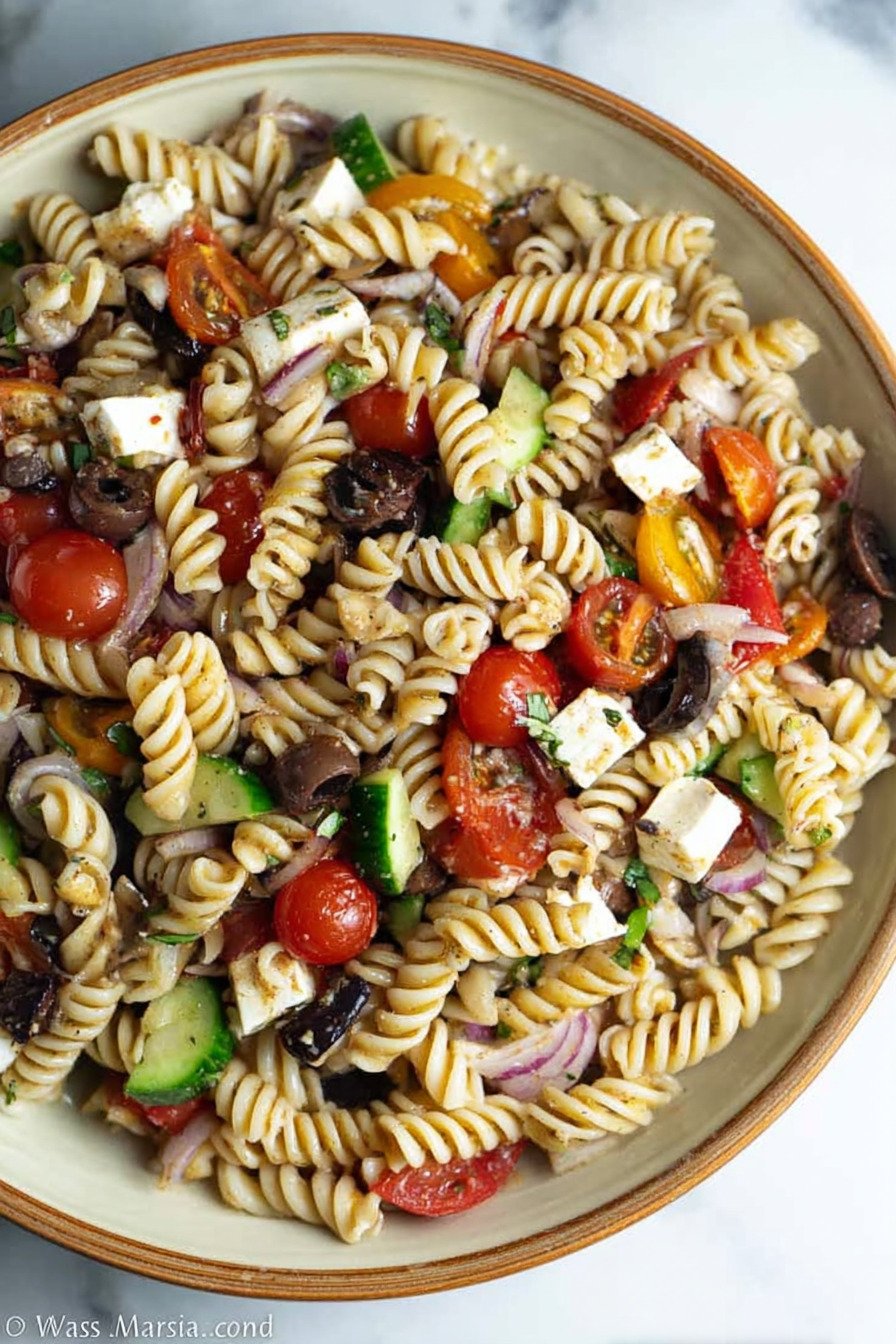
This easy balsamic pasta salad works because the method respects the two things that usually make pasta salad fail: moisture and timing. Pasta absorbs dressing as it sits, so the goal is not to drown it at the start. The goal is to coat cool, well-drained pasta with enough balsamic vinaigrette to season it, then protect the crunch of the vegetables and the creamy texture of the mozzarella.
The flavor is built from contrast: tangy balsamic vinaigrette, savory sun-dried tomato oil, mild garlic, herbs, sweet red pepper, cool cucumber, juicy tomatoes, briny olives, and soft mozzarella. Because fusilli and rotini have ridges and curves, they catch the dressing better than smooth pasta shapes. That small choice makes the salad taste seasoned in every bite instead of flavorful only at the bottom of the bowl.
4) Why Most Balsamic Pasta Salad Recipes Fail
Most balsamic pasta salad recipes fail because the pasta carries too much water after cooking. When pasta is rinsed but not drained well, that water dilutes the vinaigrette and leaves the salad tasting flat. Shake the pasta in the colander and let it sit briefly before mixing so the dressing can cling.
Another common problem is overcooked pasta. Pasta salad needs a firm al dente texture because the pasta softens slightly as it absorbs dressing in the refrigerator. If the pasta is already too tender when drained, the finished salad can taste heavy and limp.
The dressing can also taste unbalanced if the sun-dried tomato oil is skipped or the garlic is left in large pieces. The oil adds savory roundness, while finely minced or pressed garlic spreads evenly through the vinaigrette. Large garlic pieces create harsh bites instead of gentle background flavor.
Finally, mozzarella can lose its clean texture if it is tossed too aggressively or too early. Add it after the pasta, vegetables, olives, and dressing are already combined. A gentle final toss keeps the cubes intact and gives the salad a fresher finish.
5) Ingredients for Balsamic Pasta Salad
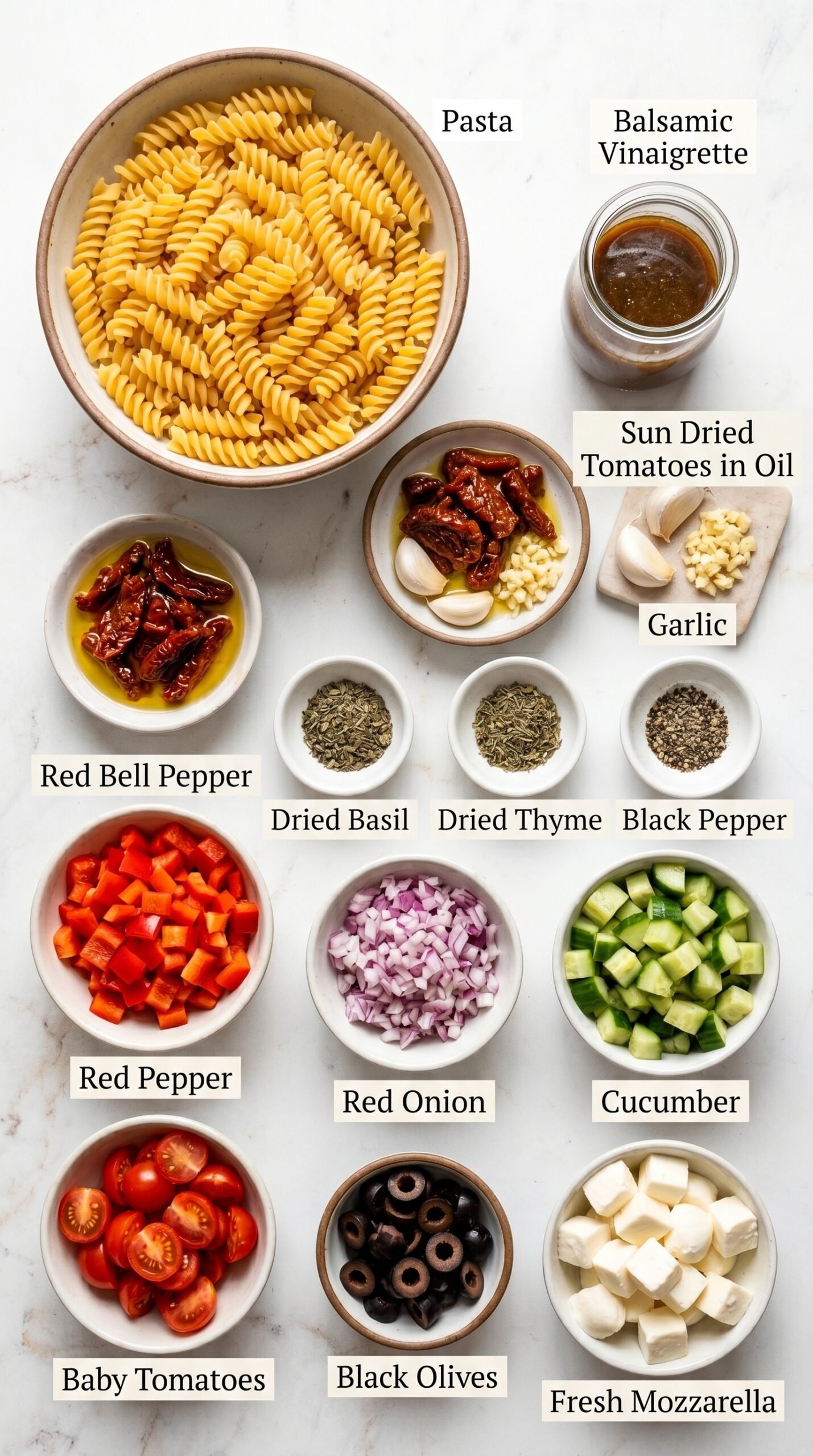
Fusilli or rotini pasta: These shapes work well because their spirals hold balsamic dressing. Cook the pasta until al dente, then cool it completely. If you use a smooth pasta shape, the dressing may slide off more easily.
Balsamic vinaigrette: This is the main flavor base of the pasta salad dressing recipe. Use it when the pasta is cool so the dressing stays bright rather than getting absorbed too quickly by hot pasta.
Sun-dried tomatoes in oil: The tomatoes add chewy, savory bursts, and the reserved oil strengthens the dressing. If the oil is left out, the balsamic pasta flavor may taste sharper and less rounded.
Garlic: A small minced or pressed clove gives the dressing depth. Use a small clove so the garlic supports the vinaigrette rather than overpowering the fresh vegetables.
Dried basil and dried thyme: These herbs add a soft Italian-style aroma. Use measured amounts because dried herbs become stronger as they hydrate in dressing.
Freshly cracked black pepper: Pepper adds a mild bite that balances the sweetness of the balsamic vinaigrette and the creaminess of the mozzarella.
Sweet red bell pepper: Red pepper adds crunch, color, and gentle sweetness. Dice it small enough so it mixes evenly with the pasta.
Red onion: Minced red onion adds sharpness and keeps the salad from tasting too rich. If the onion is cut too large, it can dominate each bite.
Cucumber: Cucumber keeps the salad cool and crisp. Add it after the pasta has cooled so it does not soften from heat.
Baby tomatoes: Halved tomatoes add juicy brightness. Cutting them helps their flavor mingle with the dressing without making the salad watery.
Sliced black olives: Olives bring briny balance to the balsamic vinaigrette. Drain them well so the extra liquid does not weaken the dressing.
Fresh mozzarella: Mozzarella adds creamy contrast. Add it at the end so it stays tender and distinct instead of breaking into the dressing.
- Fusilli or rotini vs smooth pasta: Spiraled shapes trap vinaigrette better, giving the salad more flavor in each bite.
- Sun-dried tomato oil vs plain oil: The tomato oil carries deeper savory flavor and helps the dressing taste fuller.
- Fresh mozzarella vs shredded cheese: Cubed mozzarella gives creamy, clean bites, while shredded cheese can clump and feel heavier.
- Cold pasta vs warm pasta: Cold pasta keeps the vegetables crisp and prevents the mozzarella from softening too much.
6) How to Make Balsamic Pasta Salad
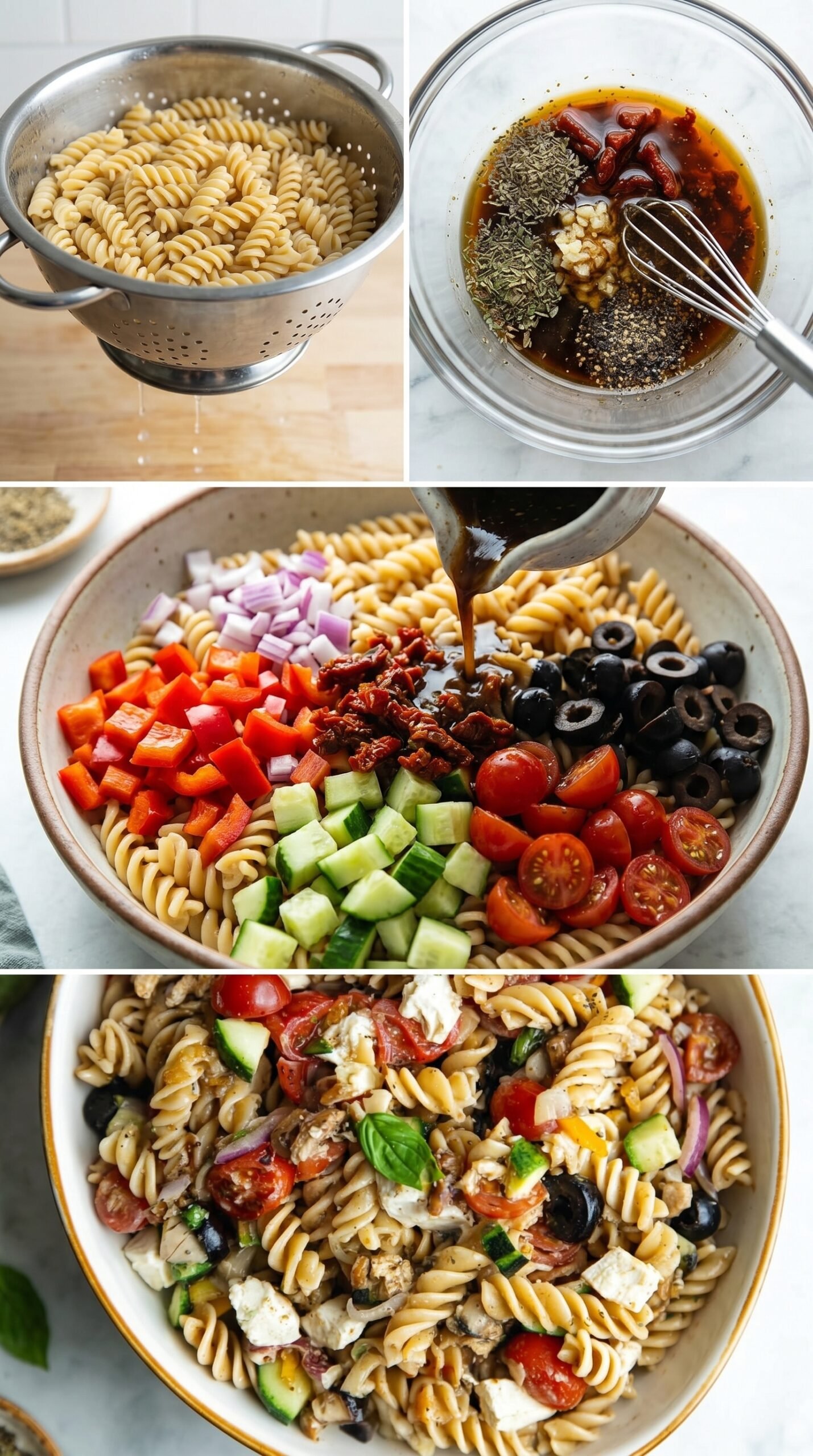
Step 1: Cook the fusilli or rotini in heavily salted water until al dente. The pasta should feel tender but still have a slight firmness in the center because it will continue absorbing dressing after mixing.
Step 2: Drain the pasta and rinse it with cold water until it feels cool to the touch. Shake the colander well because hidden water between the spirals can thin the dressing and create a bland salad.
Step 3: In a large serving bowl, whisk the balsamic vinaigrette with the reserved sun-dried tomato oil, garlic, basil, thyme, and black pepper. The dressing should look glossy and smell tangy, herbal, and savory.
Step 4: Add the cooled pasta, red pepper, red onion, cucumber, tomatoes, sun-dried tomatoes, and black olives. Toss gently from the bottom of the bowl until the vegetables are evenly distributed and the pasta is coated.
Step 5: Add the mozzarella last and toss once more with a light hand. Taste before serving, and if the salad has chilled for 1 to 2 hours, add a few extra tablespoons of vinaigrette to restore the glossy coating.
7) Recipe Card: Balsamic Pasta Salad

Balsamic Pasta Salad (Easy, Zesty & Perfect for a Crowd!)
Ingredients
Pasta
- 16 oz. fusilli or rotini pasta, cooked just until al dente so the spirals hold dressing without turning soft
Balsamic Dressing
- 1 cup balsamic vinaigrette, well shaken before measuring for balanced acidity and oil
- 1/4 cup sun dried tomatoes in oil, with the flavorful oil reserved for the dressing
- 1 clove small garlic, minced or pressed so it blends smoothly into the vinaigrette
- 1/2 tsp dried basil, lightly rubbed between your fingers to release aroma
- 1/4 tsp dried thyme, added sparingly so it supports the balsamic instead of overpowering it
- 1/8 teaspoon freshly cracked black pepper, for a gentle savory finish
Pasta Salad
- 1 sweet bell red pepper, diced into small pieces for crunch and color
- 1/4 cup minced red onion, cut finely so the flavor spreads without harsh bites
- 1 1/4 cup diced cucumber, kept crisp and cool before mixing
- 1 cup baby tomatoes, halved so their juices mingle lightly with the dressing
- 1 3.8 oz can sliced black olives, drained well to avoid watering down the salad
- 8 oz fresh mozzarella, cut into 1/2-inch cubes and added last to keep its clean, creamy texture
Instructions
- Cook the fusilli or rotini in heavily salted boiling water according to the package directions until al dente. Drain, then rinse under cold water until the pasta is cool to the touch; shake off excess water well so the dressing clings instead of sliding off.
- In a large serving bowl, whisk together the balsamic vinaigrette, reserved sun-dried tomato oil, minced garlic, dried basil, dried thyme, and black pepper until the dressing looks glossy and evenly combined.
- Add the cooled pasta, red pepper, red onion, cucumber, baby tomatoes, sun-dried tomatoes, and black olives to the bowl. Toss gently but thoroughly, lifting from the bottom so the vegetables stay crisp and every pasta spiral gets coated.
- Add the mozzarella cubes and toss once more with a light hand. Taste and adjust the seasoning if needed, then serve immediately or refrigerate for 1–2 hours. Before serving, stir again and add a few extra tablespoons of vinaigrette if the pasta has absorbed too much dressing.
8) Tips for Making Balsamic Pasta Salad
Salt the pasta water generously because this is the only chance to season the pasta from the inside. A flavorful dressing cannot fully fix pasta that was cooked in under-seasoned water.
Let the pasta cool completely before mixing. Warm pasta absorbs vinaigrette quickly and can soften the cucumber, tomatoes, and mozzarella. Cold pasta gives you more control over the final texture.
Use the dressing in two stages if serving later. Toss the salad first so the pasta absorbs flavor, then refresh it with a small amount of vinaigrette before serving. This keeps the salad bright instead of oily or dry.
Cut the vegetables into small, even pieces. Pasta salad tastes better when every forkful has pasta, crunch, acidity, briny olives, and creamy mozzarella rather than one large vegetable piece at a time.

9) Common Mistakes & Fixes
Problem: The salad tastes watery. Cause: The pasta, olives, or vegetables carried too much moisture into the bowl. Fix: Drain the pasta thoroughly, shake off the olives, and avoid adding extra liquid from the tomatoes.
Problem: The pasta is soft and dull. Cause: The pasta was cooked past al dente before chilling. Fix: Cook only until firm-tender, then rinse with cold water to stop the cooking quickly.
Problem: The garlic tastes harsh. Cause: The garlic pieces are too large or the clove is too strong. Fix: Press or finely mince a small clove so it blends evenly into the balsamic vinaigrette.
Problem: The salad tastes dry after chilling. Cause: Pasta absorbs vinaigrette in the refrigerator. Fix: Stir in a few extra tablespoons of vinaigrette just before serving.
Problem: The mozzarella looks broken or smeared. Cause: It was tossed too early or too roughly. Fix: Fold it in at the end with a gentle motion.
10) How to Tell Balsamic Pasta Salad Has the Right Texture
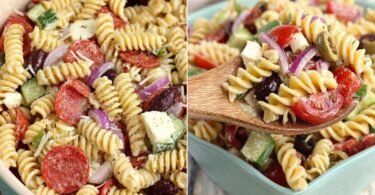
Balsamic pasta salad has the right texture when the pasta is cool, firm-tender, and lightly glossy rather than swimming in dressing. The vegetables should look fresh and distinct, with crisp cucumber, juicy tomatoes, and bright red pepper pieces spread evenly through the bowl.
The dressing should cling to the pasta spirals without pooling heavily at the bottom. A little shine is good; a watery layer means the pasta or vegetables were not drained well enough. The mozzarella should stay in soft cubes, not melt, smear, or disappear into the vinaigrette.
The flavor should be tangy, savory, lightly herbal, and balanced with enough salt and pepper to wake up the vegetables. The aroma should carry balsamic brightness, sun-dried tomato richness, and gentle garlic. If the salad tastes flat, it usually needs a small splash of vinaigrette and a fresh toss.
11) Professional Secrets Behind Better Balsamic Pasta Salad
The biggest professional-style improvement is controlling absorption. Pasta salad changes as it rests because starch pulls in dressing. Instead of adding all possible dressing at the beginning, coat the pasta well, let it chill briefly, then adjust before serving. This gives you flavor without a greasy or soggy finish.
Another useful technique is seasoning through contrast. Balsamic vinaigrette brings acidity, olives bring saltiness, mozzarella brings creaminess, cucumber brings freshness, and sun-dried tomatoes bring concentrated savoriness. When those pieces are cut evenly, the salad tastes intentional rather than random.
For a cleaner finish, add delicate ingredients last. Mozzarella does not need aggressive mixing, and tomatoes can release juice if tossed too hard. A wide bowl and a lifting motion protect the texture better than stirring in tight circles.
12) Best Dishes or Pairings to Serve With Balsamic Pasta Salad
Balsamic pasta salad works especially well with grilled chicken, turkey burgers, steak skewers, baked salmon, or simple sandwiches because the tangy dressing cuts through richer mains. It is also one of those summer salad recipes that can sit beside smoky foods without feeling heavy.
For cookouts, serve it with corn on the cob, grilled vegetables, garlic bread, or chilled fruit. For lunches, spoon it next to roasted chicken, a green salad, or a bowl of soup. Among bbq side dishes, this salad brings color, acidity, and cool texture to the plate.


13) Making Balsamic Pasta Salad Ahead of Time
You can make balsamic pasta salad 1 to 2 hours ahead for the best balance of flavor and freshness. This short rest gives the pasta time to absorb some dressing while the vegetables still keep their crunch. Cover the bowl and refrigerate it until serving.
Before serving, stir from the bottom of the bowl and check the texture. If the pasta looks matte or tastes muted, add a few extra tablespoons of balsamic vinaigrette. For the freshest mozzarella texture, you can fold it in shortly before serving instead of letting it sit for several hours.
14) Storing Leftover Balsamic Pasta Salad
Store leftover balsamic pasta salad in an airtight container in the refrigerator for up to 3 days. The pasta will continue absorbing dressing, and the cucumbers and tomatoes will soften slightly over time, so the salad is at its brightest on the first day.
Do not freeze this pasta salad. Fresh cucumber, tomatoes, and mozzarella lose their texture after freezing and thawing. To revive leftovers, stir gently and add a small splash of vinaigrette before serving cold. Leftovers can also be spooned over greens for a quick lunch salad.
15) FAQ (Real Cooking Questions)
Can I make balsamic pasta salad the night before? You can, but the texture is best when made 1 to 2 hours ahead. If making it the night before, keep extra vinaigrette aside and stir it in before serving to refresh the pasta.
Should I rinse pasta for pasta salad? Yes. For cold pasta salad, rinsing stops the cooking and cools the pasta quickly. The important part is draining it well afterward so the dressing does not become watery.
Can I use a different pasta shape? Yes, but choose a short shape with ridges or curves. Penne, bow ties, or shells can work, while long noodles are harder to toss evenly in a homemade pasta salad.
Why did my balsamic pasta salad taste bland after chilling? Pasta absorbs dressing as it rests. Stir the salad, taste it cold, and add a few extra tablespoons of vinaigrette if the flavor needs more brightness.
Can I make this without mozzarella? Yes, but the salad will taste sharper and less creamy. If leaving it out, consider serving the salad with a richer main dish or adding a little extra olive-rich vinaigrette for balance.
16) Save This Balsamic Pasta Salad Recipe
If this balsamic pasta salad helped you solve the problem of dry, bland, or watery pasta salad, save it for summer cookouts, family dinners, and make-ahead lunches. The key reminder is: cool and drain the pasta well, then refresh with vinaigrette before serving.

17) Conclusion
Once you understand how pasta absorbs dressing, balsamic pasta salad becomes much easier to control. The difference is not complicated; it is in the small choices: al dente pasta, thorough draining, balanced vinaigrette, evenly cut vegetables, and mozzarella added at the end. Those details turn a basic bowl of pasta and vegetables into a bright, zesty side dish with clean texture and reliable flavor.
The next time a pasta salad tastes flat, watery, or dry, you will know exactly what to adjust. Taste after chilling, refresh the dressing only as needed, and let the salad stay crisp instead of heavy. That is the simple technique behind a better bowl.

18) Nutrition
Serving Size 1 portion Calories 365 Sugar 6 g Sodium 560 mg Fat 19 g Saturated Fat 6 g Carbohydrates 38 g Fiber 3 g Protein 12 g Cholesterol 25 mg
Leave a Comment