

1) What Makes This Classic Pasta Salad Worth Saving
Pasta salad should never taste dry, dull, or oily after chilling. I’m Elena, and I learned that the common problem is not the pasta itself, but how it is cooled, drained, dressed, and rested. After testing a few batches that tasted flat once cold, I adjusted the vinaigrette balance and discovered that well-drained al dente rotini holds flavor without turning soggy. This classic pasta salad brings me back to relaxed summer dinners, where one chilled bowl can carry the whole table with color, crunch, creamy cheese, savory pepperoni, and bright Italian-style flavor.
Table of Contents
- 1) What Makes This Classic Pasta Salad Worth Saving
- 2) Key Takeaways
- 3) Easy Classic Pasta Salad Recipe
- 4) Why Most Classic Pasta Salad Recipes Fail
- 5) Ingredients for Classic Pasta Salad
- 6) How to Make Classic Pasta Salad
- 7) Recipe Card: Classic Pasta Salad
- 8) Tips for Making Classic Pasta Salad
- 9) Common Mistakes & Fixes
- 10) How to Tell Classic Pasta Salad Has the Right Texture
- 11) Professional Secrets Behind Better Classic Pasta Salad
- 12) Best Dishes or Pairings to Serve With Classic Pasta Salad
- 13) Making Classic Pasta Salad Ahead of Time
- 14) Storing Leftover Classic Pasta Salad
- 15) FAQ (Real Cooking Questions)
- 16) Save This Classic Pasta Salad Recipe
- 17) Conclusion
- 18) Nutrition
2) Key Takeaways
- Cook the rotini al dente: Pasta salad needs structure because the pasta continues to soften slightly as it chills in dressing.
- Rinse and drain thoroughly: Cooling stops carryover cooking, while good draining prevents watery vinaigrette and bland flavor.
- Use a bold vinaigrette: Cold pasta mutes seasoning, so the olive oil, red wine vinegar, herbs, garlic powder, salt, pepper, and red pepper flakes need enough presence.
- Let it rest before serving: One hour in the refrigerator allows the tomatoes, pepperoni, cheeses, olives, and vegetables to settle into a balanced cold classic pasta salad.
3) Easy Classic Pasta Salad Recipe
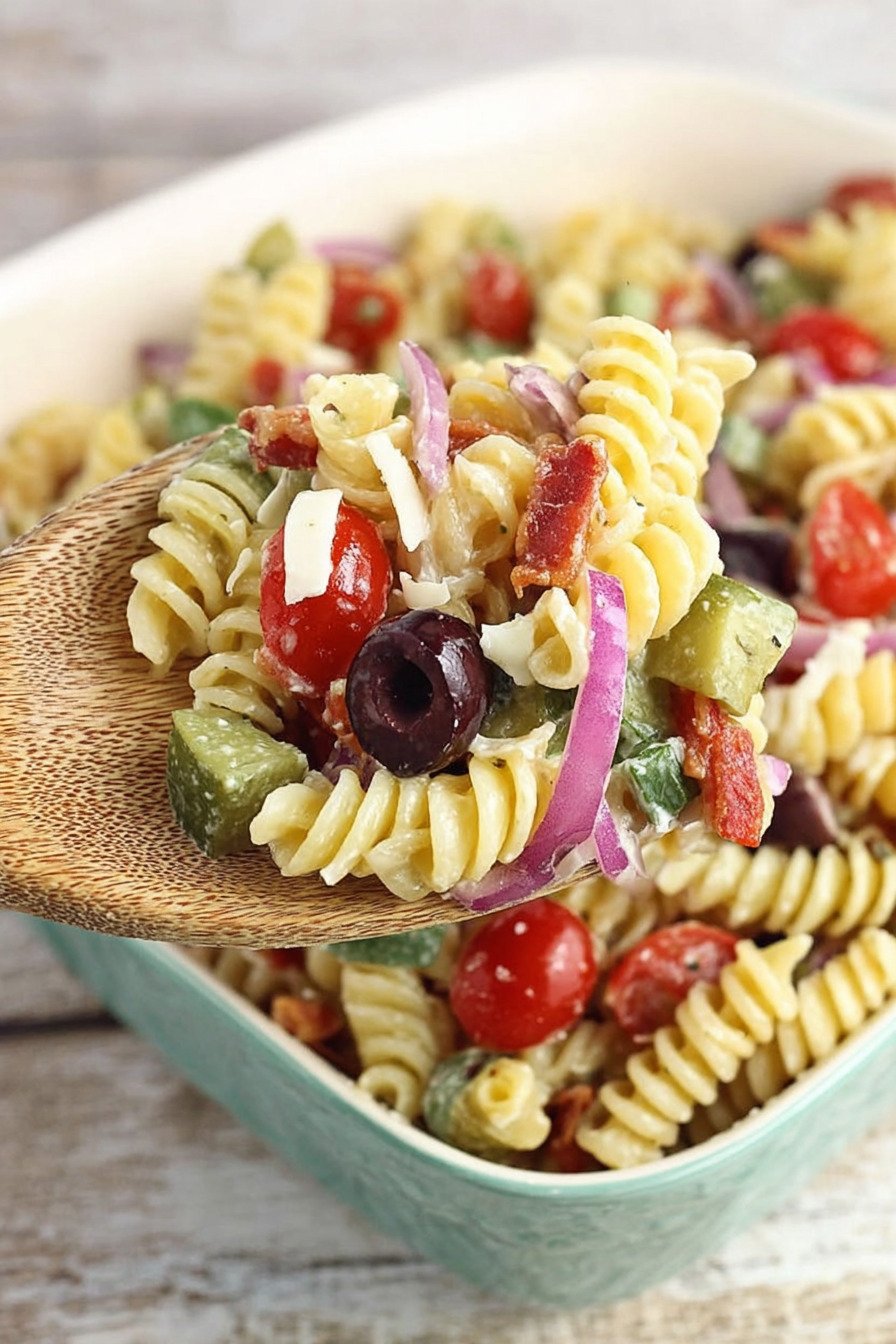
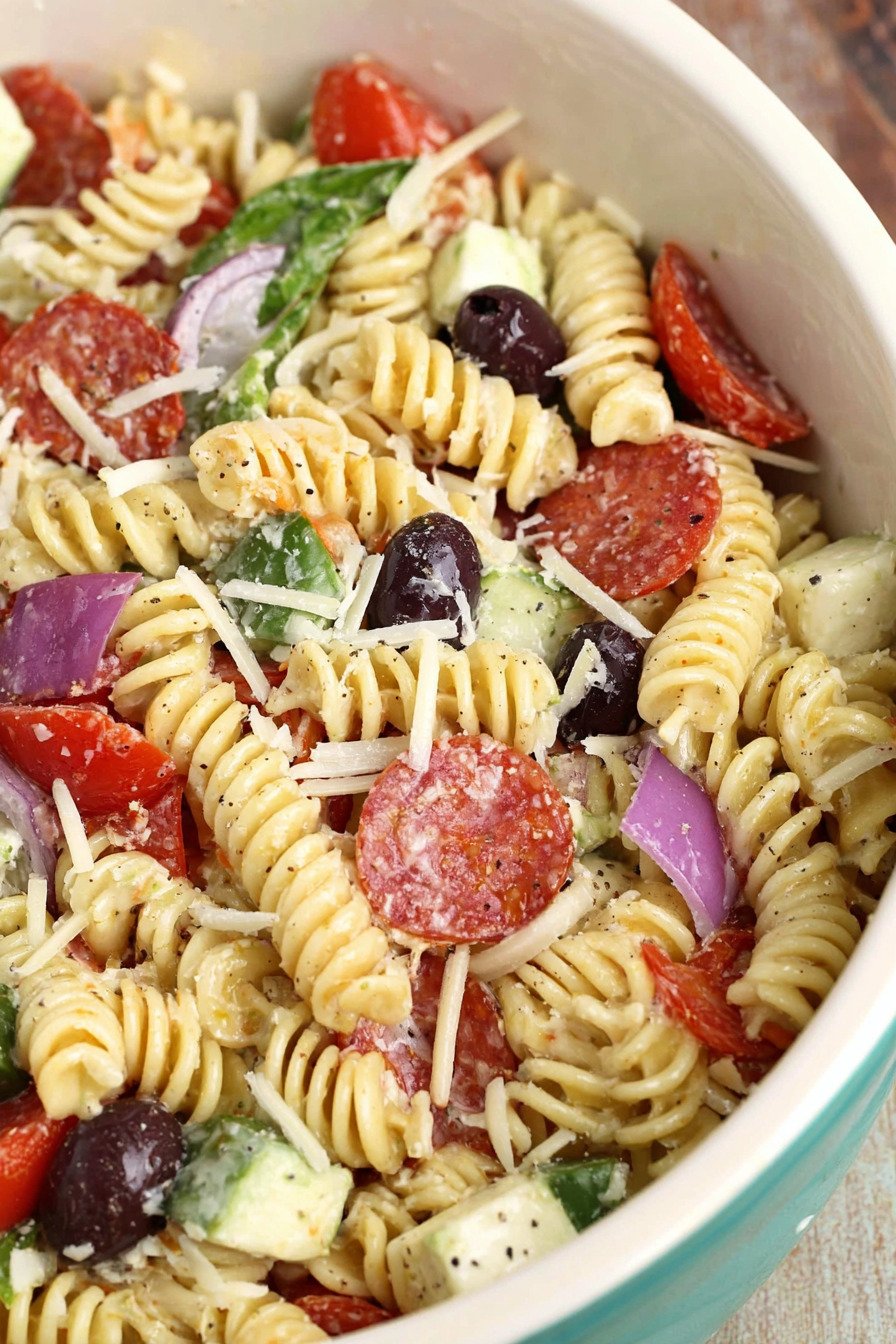
This easy classic pasta salad works because every ingredient has a clear job. The tri-color rotini catches vinaigrette in its spirals, the cherry tomatoes add juicy brightness, the pepperoni gives savory depth, and the mozzarella softens the sharper edges of the onion, olives, and vinegar. The method is simple, but the small details matter: pasta should be cooked in salted water, cooled completely, drained well, and tossed with the dressing before it chills. That resting time turns separate ingredients into a cohesive party pasta salad side dish instead of a bowl of plain pasta with toppings.
4) Why Most Classic Pasta Salad Recipes Fail
Most classic pasta salad recipes fail because the pasta is either overcooked, under-seasoned, poorly drained, or dressed without enough acidity. Overcooked rotini loses its spring and breaks when tossed, especially after chilling. Pasta that is not rinsed can keep cooking from residual heat and become soft before the salad even reaches the refrigerator. Poor draining leaves water clinging to the spirals, which dilutes the vinaigrette and makes the whole bowl taste flat.
Another common failure is using a timid dressing. Cold foods need stronger seasoning because chilled fat, cheese, and pasta can mute salt and herbs. The red wine vinegar sharpens the salad, the olive oil carries the seasoning, and the parmesan helps the dressing cling. The final mistake is serving the salad straight from a very cold refrigerator without tossing it again. Letting it stand briefly and stirring before serving brings back the glossy coating and balanced flavor.
5) Ingredients for Classic Pasta Salad
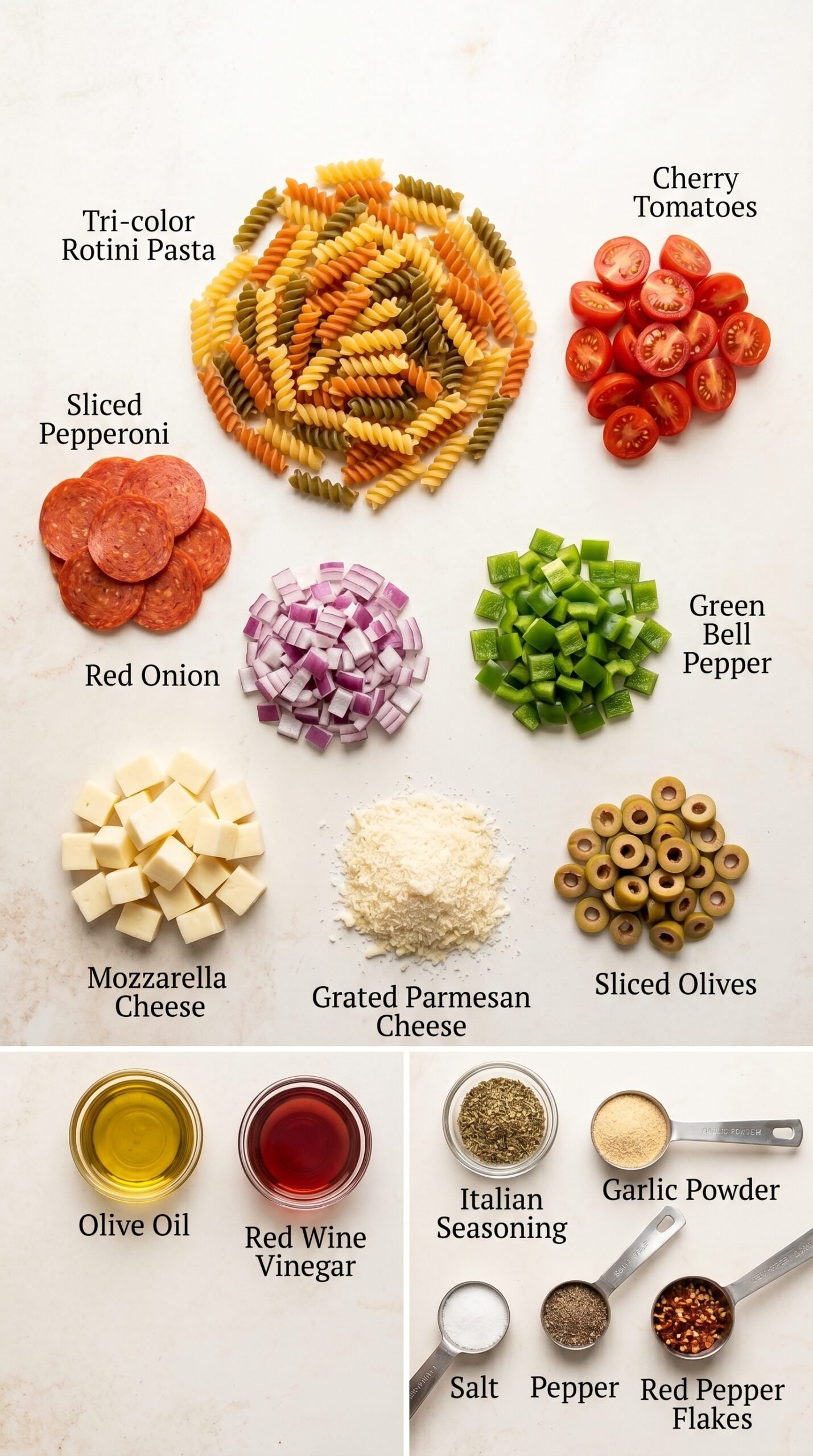
Tri-color rotini pasta: Rotini is used because its ridges and spirals hold vinaigrette better than smooth pasta. Cook it only until al dente; if it becomes too soft in the pot, it will feel heavy after chilling.
Cherry tomatoes: Halved cherry tomatoes add sweetness, acidity, and moisture. Add them after the pasta cools so they stay fresh instead of warming and collapsing.
Sliced pepperoni: Pepperoni adds salty, seasoned richness that makes the salad feel hearty. If omitted for a meatless Italian pasta salad variation, increase the olives, mozzarella, or vegetables so the bowl still has depth.
Red onion: Diced red onion gives sharpness and crunch. Cutting it small is important because large pieces can dominate the bite.
Green bell pepper: Bell pepper brings fresh crunch and a clean vegetal note. It is added raw so the salad has contrast against the tender pasta and creamy cheese.
Mozzarella cheese: Cubed mozzarella gives cool, creamy texture. Keep the cubes firm and chilled before mixing so they do not smear into the salad.
Grated parmesan cheese: Parmesan seasons the pasta salad from inside the bowl. It adds salty depth and helps the vinaigrette cling to the rotini.
Sliced olives: Olives add briny flavor that balances the richness of the olive oil, cheese, and pepperoni. Drain them well so their packing liquid does not weaken the dressing.
Olive oil: Olive oil forms the body of the vinaigrette. It carries the herbs and coats the pasta, but it needs vinegar and seasoning so the salad does not taste oily.
Red wine vinegar: Vinegar gives the salad its bright, tangy finish. Without enough acidity, italian pasta salad cold from the refrigerator can taste heavy.
Italian seasoning: This herb blend gives the vinaigrette its familiar savory aroma. Whisking it into the dressing helps distribute flavor more evenly than sprinkling it over the finished salad.
Garlic powder: Garlic powder gives smooth garlic flavor without the harsh bite of raw garlic. It works well in cold dressings because it disperses evenly.
Salt, pepper, and red pepper flakes: These season the dressing and sharpen the final flavor. Red pepper flakes should stay subtle, adding warmth rather than strong heat.
- Rotini vs smooth pasta: Rotini holds dressing in its curves, while smoother shapes can let vinaigrette slide to the bottom of the bowl.
- Rinsed pasta vs hot pasta: Rinsed pasta stops cooking and keeps cheese firm; hot pasta can soften vegetables and melt mozzarella edges.
- Homemade vinaigrette vs bottled dressing: A whisked vinaigrette lets you control acidity, salt, herbs, and heat so the salad tastes balanced after chilling.
- Pepperoni version vs meatless version: Pepperoni adds savory richness, while a meatless version needs extra briny or creamy ingredients to avoid tasting thin.
6) How to Make Classic Pasta Salad
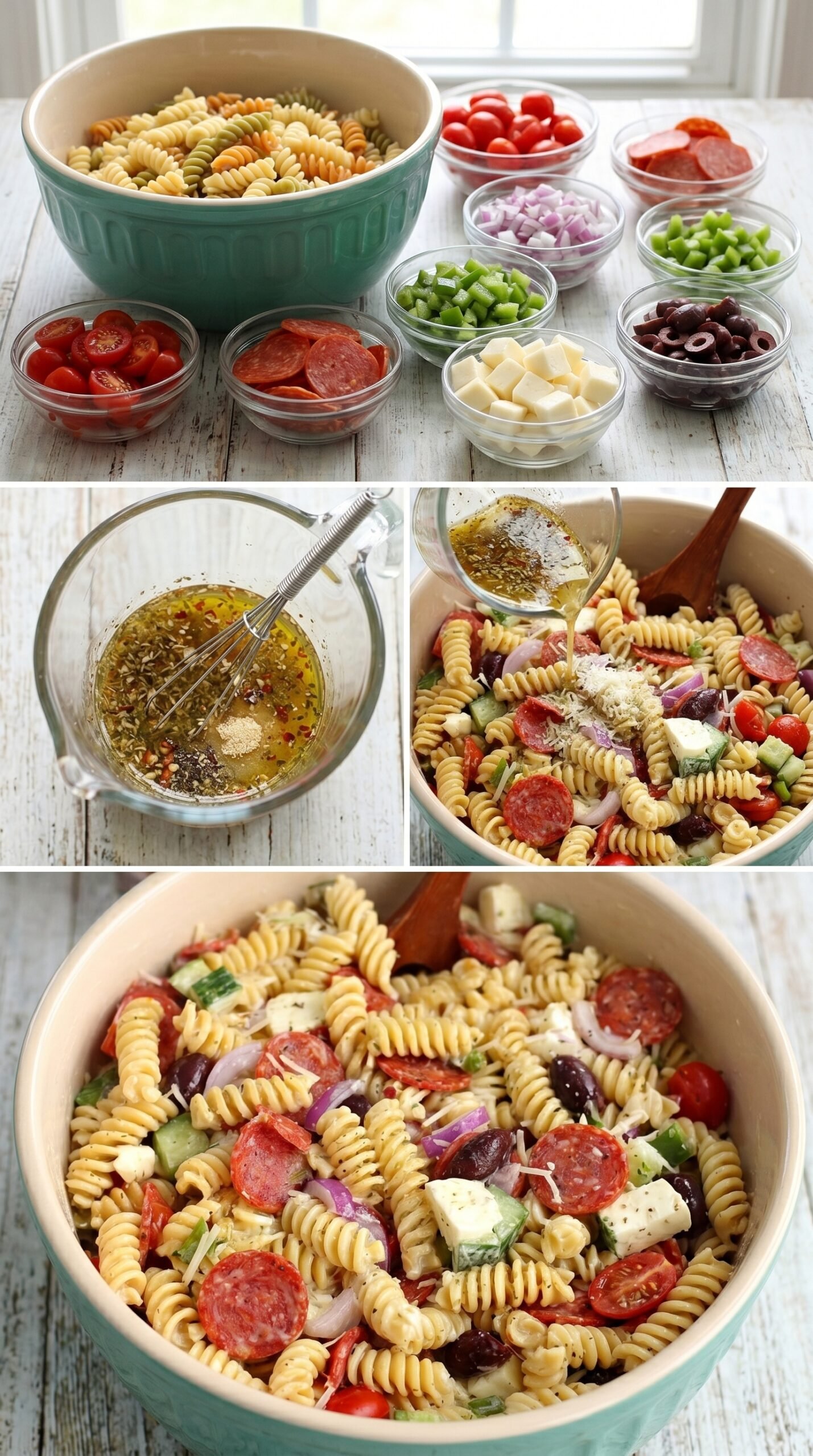
Step 1: Cook the rotini in salted boiling water until al dente. The pasta should be tender but still have a little firmness in the center because it needs to hold up after rinsing, tossing, and chilling.
Step 2: Drain the pasta and rinse it under cold water until it reaches room temperature. Shake off as much water as possible; excess water is one of the fastest ways to make pasta salad taste bland.
Step 3: Add the cooled pasta to a large bowl, then add the tomatoes, pepperoni, red onion, green bell pepper, mozzarella, parmesan, and olives. A large bowl matters because tight mixing crushes tomatoes and breaks pasta.
Step 4: Whisk the olive oil, red wine vinegar, Italian seasoning, garlic powder, salt, pepper, and red pepper flakes in a separate bowl. The dressing should look evenly speckled with herbs and seasoning before it goes over the pasta.
Step 5: Pour the vinaigrette over the salad and toss from the bottom until everything is coated. Chill for 1 hour, then toss again before serving. If the salad has been refrigerated overnight, let it stand for 20 to 30 minutes so the dressing loosens and the flavors wake up.
7) Recipe Card: Classic Pasta Salad

Classic Pasta Salad With Italian Vinaigrette
Ingredients
- 24 ounces tri-color rotini pasta, uncooked, cooked just to al dente so it holds its spiral shape after chilling
- 1 pint cherry tomatoes, halved, for juicy sweetness and fresh color
- 12 ounces sliced pepperoni, for savory bite and seasoned flavor throughout the salad
- 1 red onion, diced, cut small so the sharpness spreads evenly without overpowering
- 1 green bell pepper, diced, for crisp texture and a fresh peppery note
- 16 ounces mozzarella cheese, cubed, chilled before mixing so it stays firm
- 1 cup grated parmesan cheese, for salty depth that blends into the vinaigrette
- 8 ounces olives, sliced, drained well to avoid watering down the dressing
- 1 ½ cups olive oil, the base of the vinaigrette dressing
- ½ cup red wine vinegar, for acidity that keeps the salad bright
- 2 tablespoons Italian seasoning, for herb flavor in every bite
- 2 teaspoons garlic powder, for smooth garlic flavor without raw harshness
- 1 ½ teaspoons salt, plus salted pasta water for better seasoning from the start
- 1 teaspoon pepper, for mild warmth
- ½ teaspoon red pepper flakes, for a gentle background heat
Instructions
- Bring a large pot of salted water to a boil and cook the tri-color rotini according to the package directions until al dente. Drain immediately, then rinse under cold water until the pasta is room temperature so it stops cooking and does not turn soft. Shake off excess water well, then place the pasta in a large mixing bowl.
- Add the cherry tomatoes, sliced pepperoni, diced red onion, diced green bell pepper, cubed mozzarella, grated parmesan, and sliced olives to the bowl with the cooled pasta. Keep the pieces evenly sized where possible so every spoonful has a balanced mix of pasta, cheese, vegetables, and pepperoni.
- In a separate bowl, whisk together the olive oil, red wine vinegar, Italian seasoning, garlic powder, salt, pepper, and red pepper flakes until the vinaigrette looks evenly blended. Whisk just before pouring because oil and vinegar naturally begin to separate as they sit.
- Pour the vinaigrette over the pasta salad and toss thoroughly, lifting from the bottom of the bowl so the dressing coats the rotini spirals and the parmesan disperses evenly. Refrigerate for 1 hour before serving so the pasta absorbs flavor without becoming mushy.
- If the pasta salad has chilled for several hours or overnight and tastes very cold, let it stand at room temperature for 20 to 30 minutes. Toss again before serving to redistribute the dressing, revive the texture, and bring the flavors back into balance.
8) Tips for Making Classic Pasta Salad
The most important tip is to season in layers. Salted pasta water gives the rotini flavor before the vinaigrette is added, while the dressing seasons the vegetables, cheeses, olives, and pepperoni. If the pasta starts bland, the finished salad will need too much dressing to compensate.
Drain the pasta longer than you think you need to. Water hides inside rotini spirals, and that trapped moisture can thin the vinaigrette once the salad sits. I like to shake the colander several times and let the pasta pause briefly before moving it to the bowl.
Whisk the vinaigrette right before pouring. Olive oil and vinegar separate naturally, so a quick final whisk gives you a better coating. Toss gently but thoroughly, lifting the pasta instead of pressing down, so the mozzarella stays cubed and the tomatoes do not burst.

9) Common Mistakes & Fixes
Problem: The salad tastes watery. Cause: The pasta, olives, or tomatoes released too much moisture into the bowl. Fix: Drain the pasta and olives well, halve the tomatoes cleanly, and toss again before serving to bring the vinaigrette back around the ingredients.
Problem: The pasta is mushy. Cause: The rotini was cooked past al dente or left hot too long after draining. Fix: Cook only to al dente and rinse with cold water immediately to stop carryover cooking.
Problem: The flavor tastes flat after chilling. Cause: Cold temperatures mute salt, vinegar, herbs, and fat. Fix: Let the salad stand for 20 to 30 minutes if very cold, then toss well so the vinaigrette redistributes before serving.
Problem: The dressing pools at the bottom. Cause: The vinaigrette was not whisked well or the salad was not tossed from the bottom. Fix: Whisk until combined, pour evenly, and fold with a wide spoon until the pasta spirals look lightly glossy.
10) How to Tell Classic Pasta Salad Has the Right Texture
Classic pasta salad has the right texture when the rotini is tender but not limp, the vegetables still crunch, and the cheese cubes hold their shape. The pasta should look lightly coated, not greasy, and there should be no watery pooling at the bottom of the bowl. A good bite has springy pasta, juicy tomato, creamy mozzarella, briny olive, and savory pepperoni without one ingredient overwhelming the rest. The aroma should be tangy, herby, and lightly garlicky. If the salad tastes dull, feels dry, or looks separated, toss it again and allow it to warm slightly from refrigerator-cold before serving.
11) Professional Secrets Behind Better Classic Pasta Salad
The professional secret is understanding that pasta salad is seasoned for cold service, not hot service. When food is chilled, fat firms slightly and flavors become quieter. That is why a bold vinaigrette matters. Red wine vinegar keeps the salad lively, olive oil gives body, parmesan adds cling, and garlic powder seasons evenly without raw bite.
Another small but important detail is shape control. Dice the onion and bell pepper small enough to spread through the salad, halve the tomatoes so their juices mingle with the dressing, and keep the mozzarella in clean cubes for creamy contrast. This creates a balanced spoonful instead of bites that feel random.
12) Best Dishes or Pairings to Serve With Classic Pasta Salad
Classic pasta salad works especially well with grilled chicken, burgers, barbecue ribs, turkey sandwiches, roasted vegetables, or simple baked fish because the vinaigrette cuts through richer main dishes. For a lighter meal, serve it with a crisp green salad and fresh fruit. For cookouts and potlucks, it fits naturally beside corn on the cob, garlic bread, baked beans, coleslaw, and grilled sausages. The bright acidity and cold texture make it one of those summer pasta salad recipes that balances smoky, salty, or creamy dishes on the table.
13) Making Classic Pasta Salad Ahead of Time
This is a strong make-ahead recipe because the pasta needs time to absorb the vinaigrette. For the best texture, make it a few hours before serving and keep it covered in the refrigerator. If preparing it the night before, expect the pasta to drink in some dressing as it sits. Before serving, let the bowl stand at room temperature for 20 to 30 minutes, then toss thoroughly. This makes the salad taste fresher and prevents the cold oil from feeling heavy. If you want a sharper finish, add a small splash of vinegar only as a final adjustment.
14) Storing Leftover Classic Pasta Salad
Store leftover classic pasta salad in an airtight container in the refrigerator. It is best within 3 to 4 days, especially because the tomatoes and vegetables continue to release moisture over time. Stir before serving so the dressing, parmesan, and seasonings redistribute. Freezing is not recommended because cooked pasta, tomatoes, and mozzarella lose their best texture after thawing. Leftovers can be served as a cold lunch, tucked beside grilled protein, or refreshed with a few extra olives, tomatoes, or a light drizzle of olive oil and vinegar if the pasta has absorbed most of the dressing.
15) FAQ (Real Cooking Questions)
Can I make this classic pasta salad the night before? Yes. It holds well overnight, but the pasta will absorb some vinaigrette. Let it stand for 20 to 30 minutes before serving and toss it well so the dressing coats everything again.
Why do I need to rinse the pasta? Rinsing cools the pasta quickly, stops cooking, and removes extra surface starch. For a cold classic pasta salad, that helps prevent clumping and keeps the texture cleaner.
Can I make this a meatless Italian pasta salad? Yes, but keep the balance in mind. If you remove pepperoni, add more olives, mozzarella, bell pepper, or tomatoes so the salad still has salty, creamy, crisp, and juicy elements.
Why does my pasta salad taste bland after chilling? Cold food needs confident seasoning. Salted pasta water, parmesan, vinegar, herbs, and a final toss before serving all help the flavor come through after refrigeration.
What pasta shape works best? Tri-color rotini is a strong choice because the spirals catch vinaigrette and small bits of parmesan, onion, herbs, and pepper. Short pasta shapes with ridges usually work better than smooth shapes.
16) Save This Classic Pasta Salad Recipe
If this classic pasta salad helped you solve the dry, bland chilled pasta problem, save it for cookouts, potlucks, and make-ahead lunches. The key reminder is: cook the rotini al dente, drain it well, use a bold vinaigrette, and toss again before serving.

17) Conclusion
A good classic pasta salad is not just about mixing pasta with vegetables and dressing. It is about controlling texture, moisture, seasoning, and temperature so the salad still tastes bright after chilling. Once you understand why pasta must be cooked al dente, why the water needs to be drained well, and why the vinaigrette needs enough acidity, the recipe becomes much more reliable. Instead of a dry or watery bowl, you get tender rotini, crisp vegetables, creamy cheese, savory pepperoni, briny olives, and a dressing that tastes balanced from the first scoop to the last.
18) Nutrition
Serving Size 1 portion Calories 565 Sugar 4 g Sodium 980 mg Fat 39 g Saturated Fat 11 g Carbohydrates 38 g Fiber 3 g Protein 18 g Cholesterol 45 mg
Leave a Comment